
Blood Flow Restriction Training: What to Know
Personalized Blood Flow Restriction (BFR) training is a game-changing therapy that uses specialized cuffs to safely regulate blood flow and control occlusion pressure during exercise. BFR allows clients to train with lighter loads, typically 20 to 30% of their one-rep max, while achieving results similar to traditional heavy resistance training.
Many individuals at BWPT have limitations from injuries, surgeries, or other conditions that make traditional strength training difficult. BFR allows these clients to improve strength, function, and performance while exercising at lower intensities with less stress on the body.
Research shows that traditional hypertrophy training typically requires loads above 65% of an individual's one-rep max. With BFR, similar muscle-building benefits can be achieved using much lighter weights, making it an effective option for rehabilitation and recovery after injury or surgery.
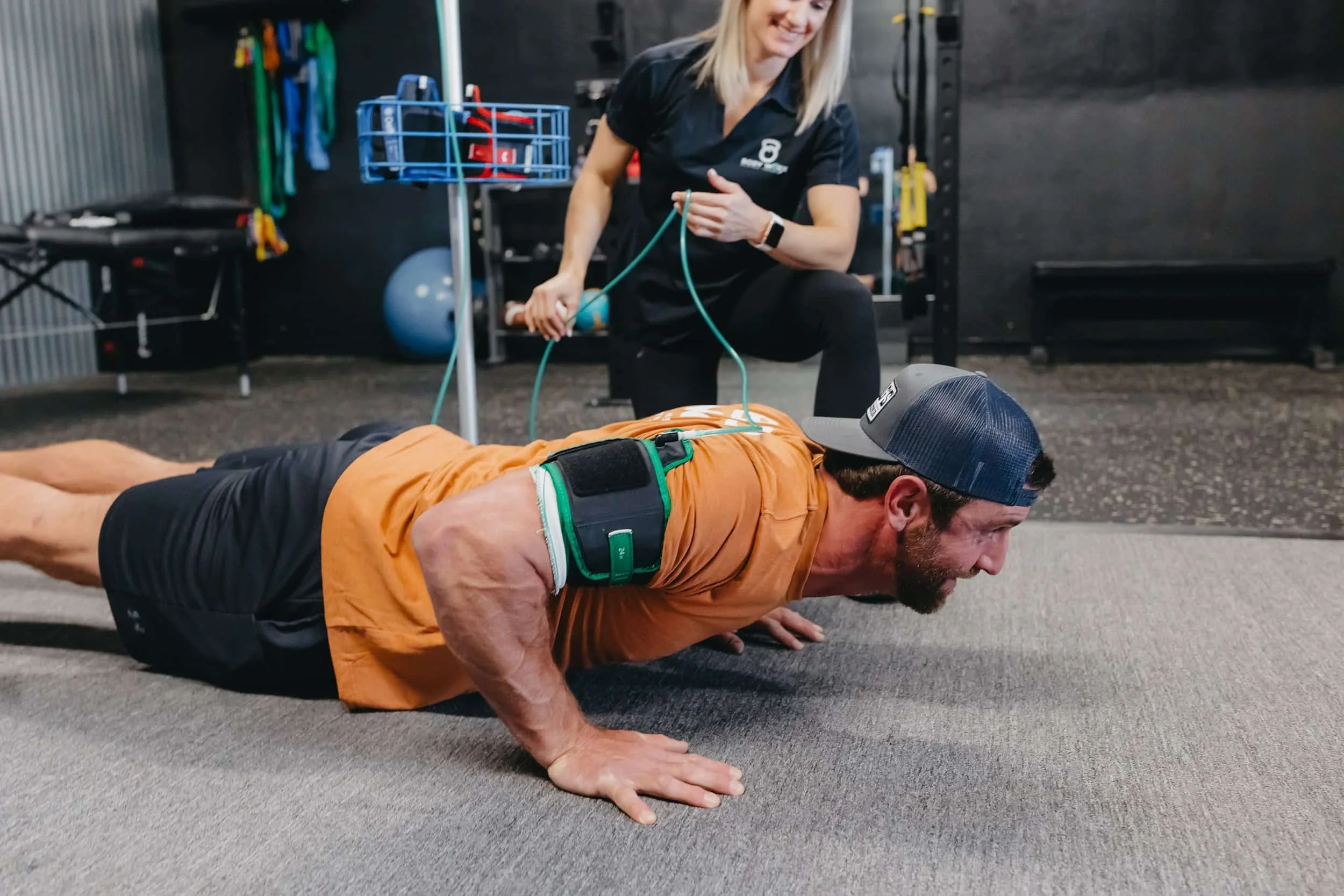
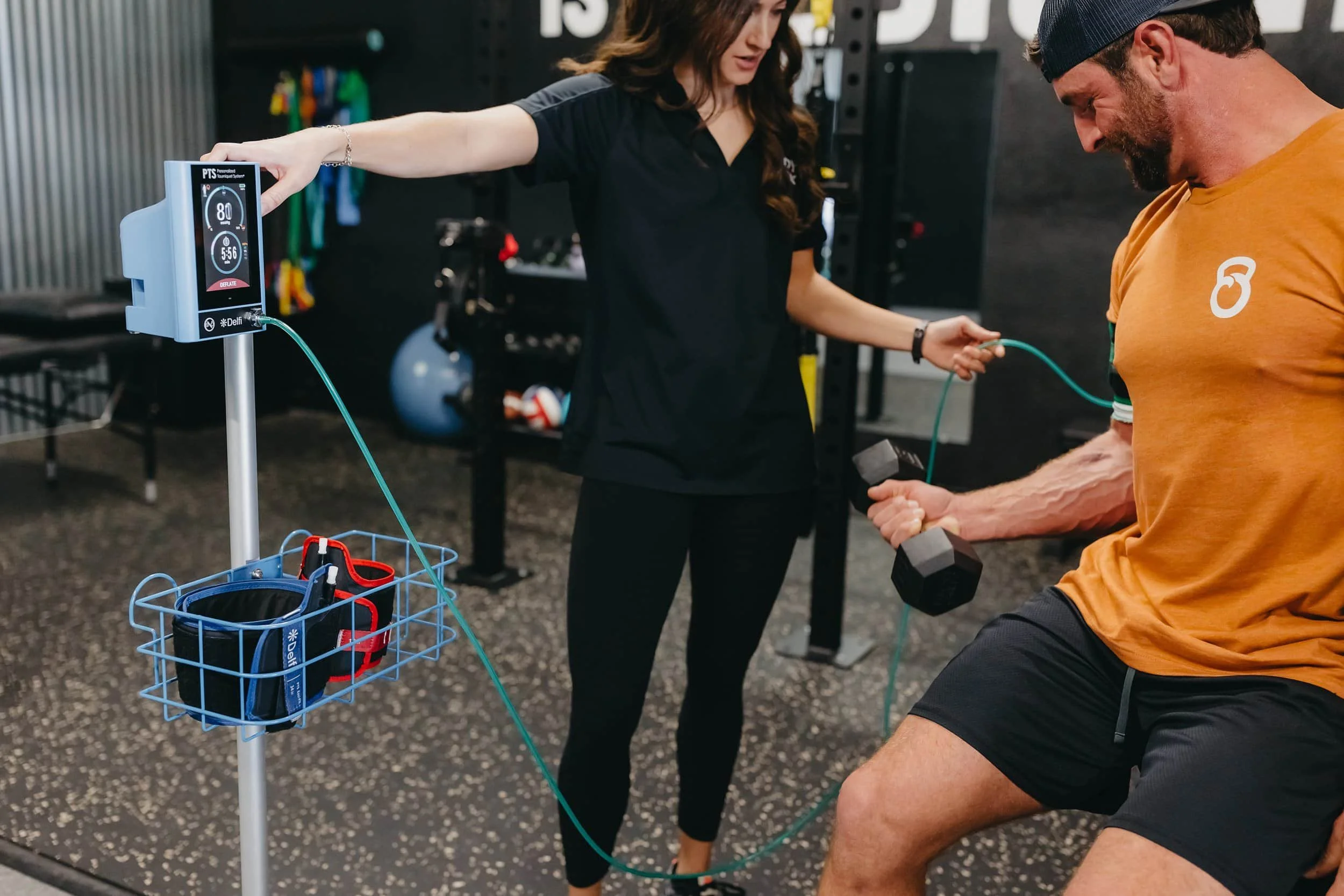
At BWPT, we use Blood Flow Restriction (BFR) training to help clients:
Reduce muscle loss and strength decline after injury or surgery.
Build strength and muscle mass using light loads of only 20 to 30% of their one-rep max.
Improve muscle endurance in less time.
Support muscle protein synthesis in older adults.
Improve strength and muscle growth after surgery.
Enhance muscle activation.
Increase growth hormone responses.
Improve overall performance.
How it works
BFR training uses specialized cuffs to determine and maintain individualized pressure throughout exercise. At BWPT, we use Delfi and Smart Cuffs to safely control occlusion pressure and optimize results.
The cuff is placed around the upper arm or leg and inflated to reduce arterial blood flow while restricting venous return. This creates a low-oxygen environment in the muscle, allowing clients to use lighter resistance while achieving strength gains similar to high-intensity training.
What's the science behind BFR?

Several mechanisms explain how BFR promotes muscle growth, but it can be simplified with this formula:
Muscle Protein Synthesis – Muscle Protein Breakdown = Muscle Growth
When your body builds more muscle protein than it breaks down, you gain muscle. When breakdown exceeds synthesis, muscle loss can occur.
During BFR training, reduced oxygen levels encourage the body to recruit larger, fast-twitch muscle fibers that are typically activated during high-intensity exercise. This allows clients to achieve strength and muscle-building benefits while using much lighter loads.
BFR also increases muscle protein synthesis while creating less muscle damage than traditional heavy resistance training. This makes it a valuable tool for athletes and patients who need to maintain or build strength without placing excessive stress on the body.
Whether recovering from injury, preparing for competition, or improving performance, BFR helps create the ideal environment for building muscle and improving recovery.
If you're interested in learning more about BFR and how it can enhance your training and recovery, leave a comment or call us at 325-261-0043.

Dr. Jodi Hierholzer, PT, DPT, CSCS Doctor of Physical Therapy Owner/Founder of BODY WORX PT
Our mission at BWPT is to help athletes and active adults stay active by optimizing recovery, performance, and injury prevention. We also offer pelvic health therapy services. If you're ready to optimize your health and get back to doing the things you love without pain or limitations, we'd love to help!
Give us a call or email us admin@bodyworx-pt.com.
